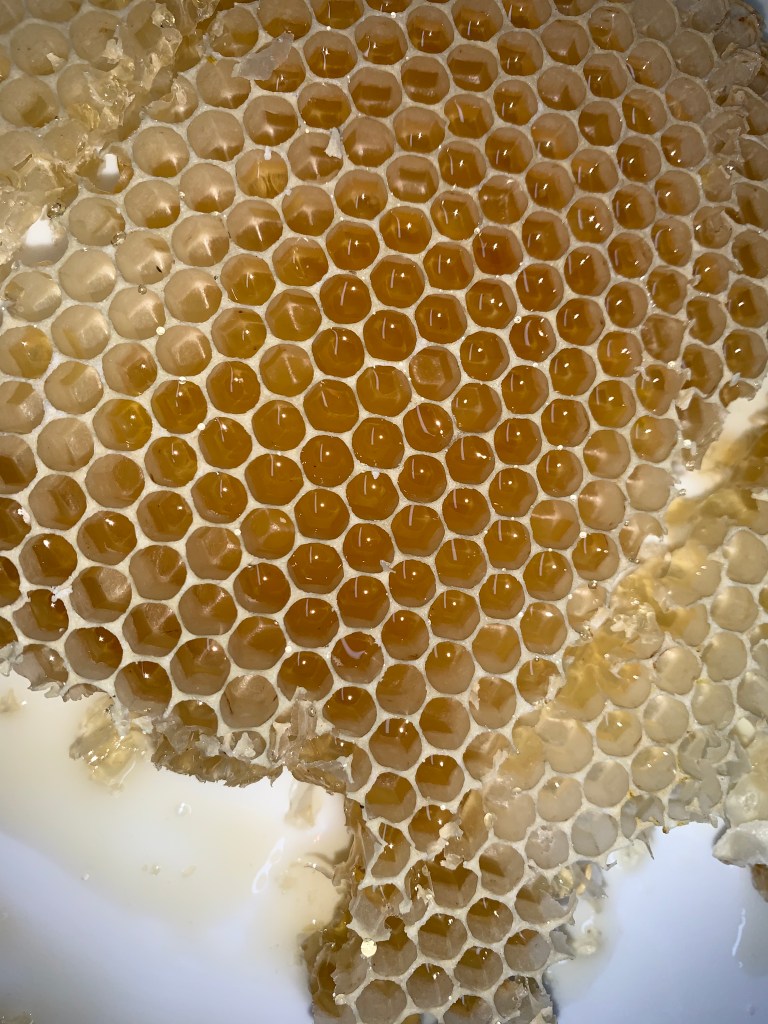
Amazing bees! 🐝🐝 How amazing are these little creatures! My husband removed some of the prefabricated frames in preparation for repositioning the beehives, so they would not be so heavy. A couple of days later, on inspection, the bees had fabricated their own perfectly formed wax foundations and already filled part of it with honey. We love our bees! Hopefully, they love the new neighbourhood!! ❤️❤️🐝🐝🌻🌻🌺
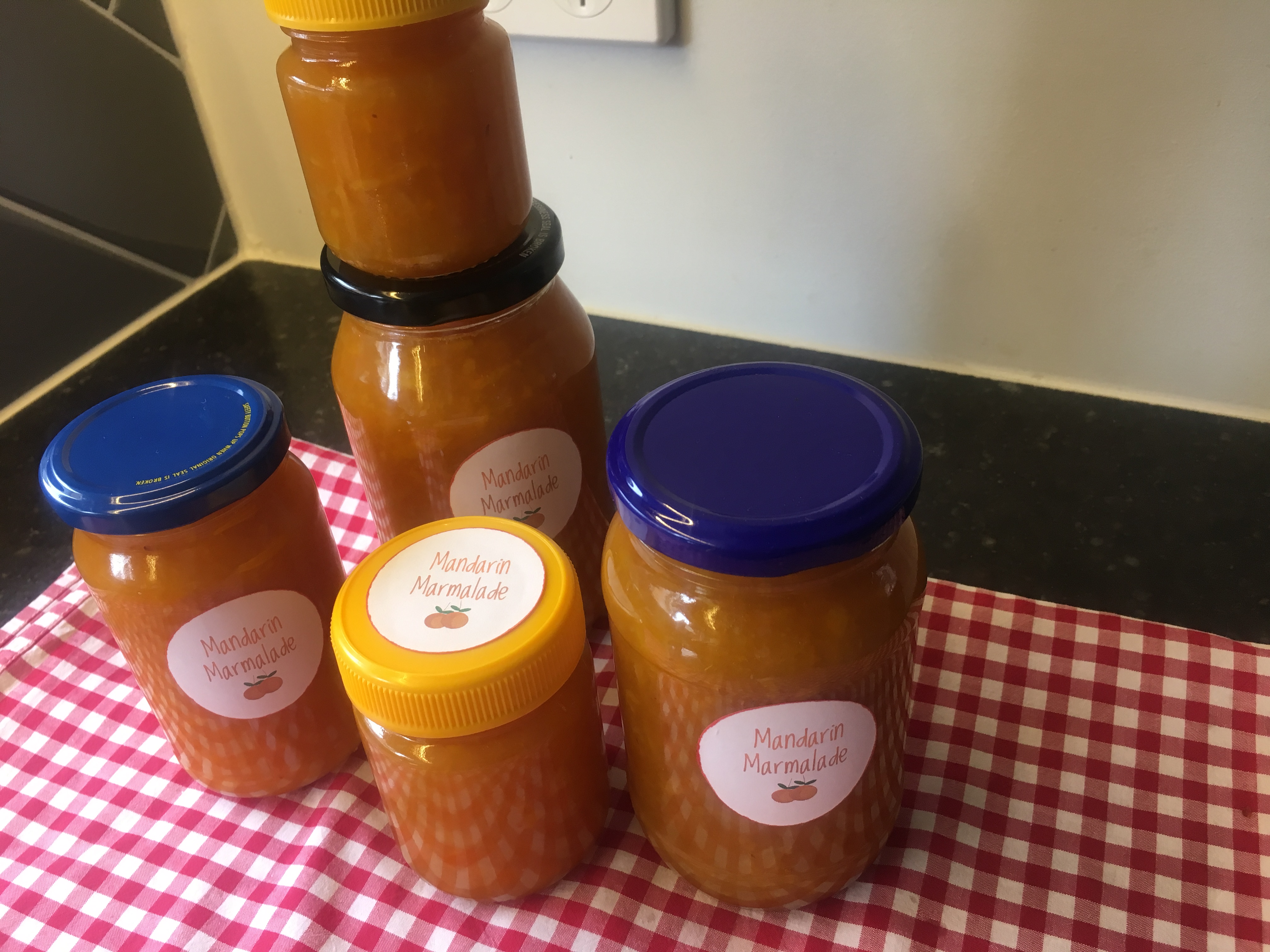
This year, at our new house, we have collected an abundance of mandarins, so I have decided to use some to make marmalade.
This is how I did it.
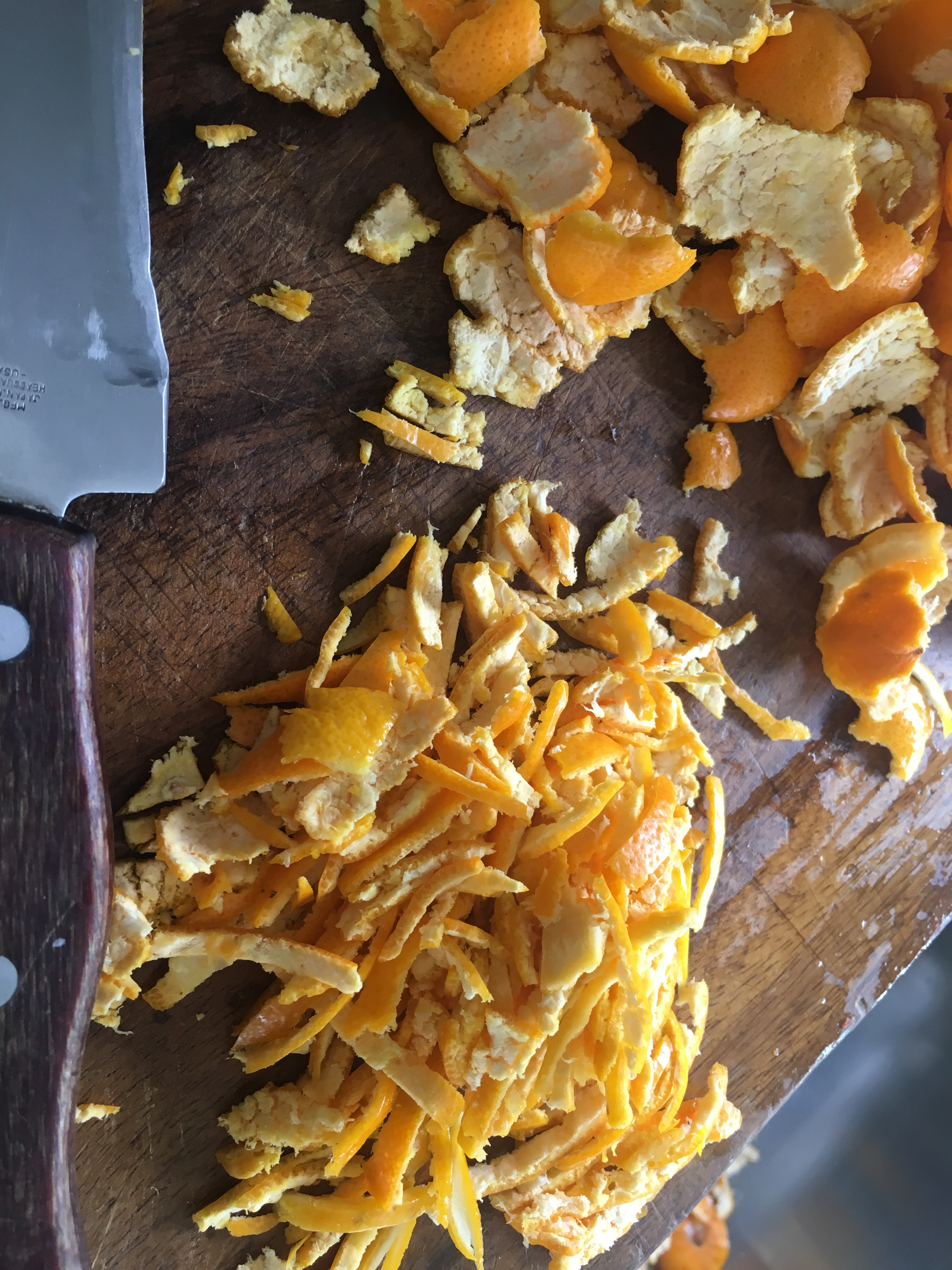
I peeled a couple of kilos of mandarins. Threw out half the peels and sliced the rest with a knife into fine strips.
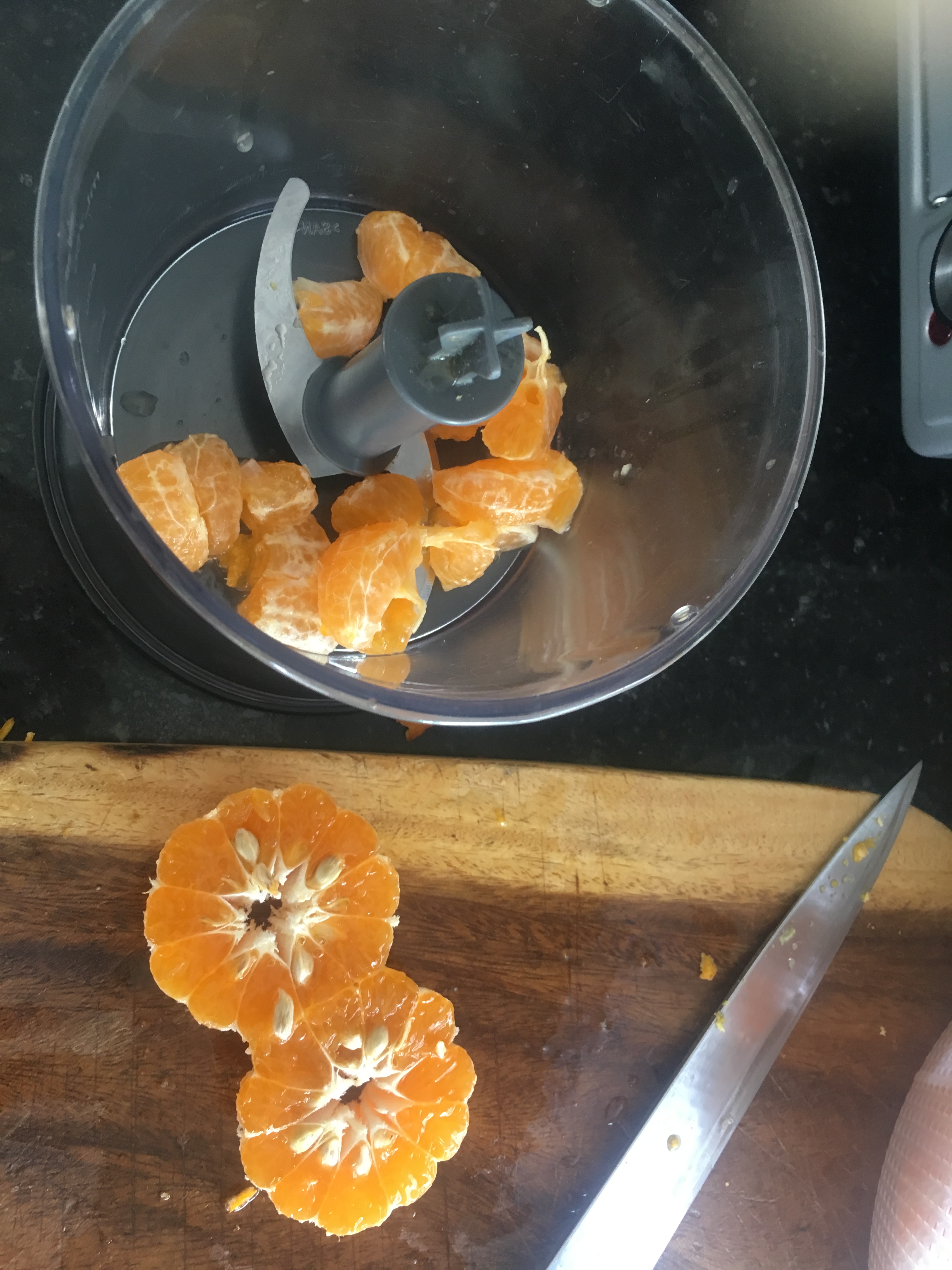
Cut the mandarins in half and remove all the pips. Reserve a couple of tablespoons of the pips to use in the jam. Place batches of cut up mandarins in a food processor or cut by hand roughly. Place pips in a muslin cloth, tie and add to mixture. Add enough water to cover and mix well. Place in a bowl and leave in fridge until the next day.
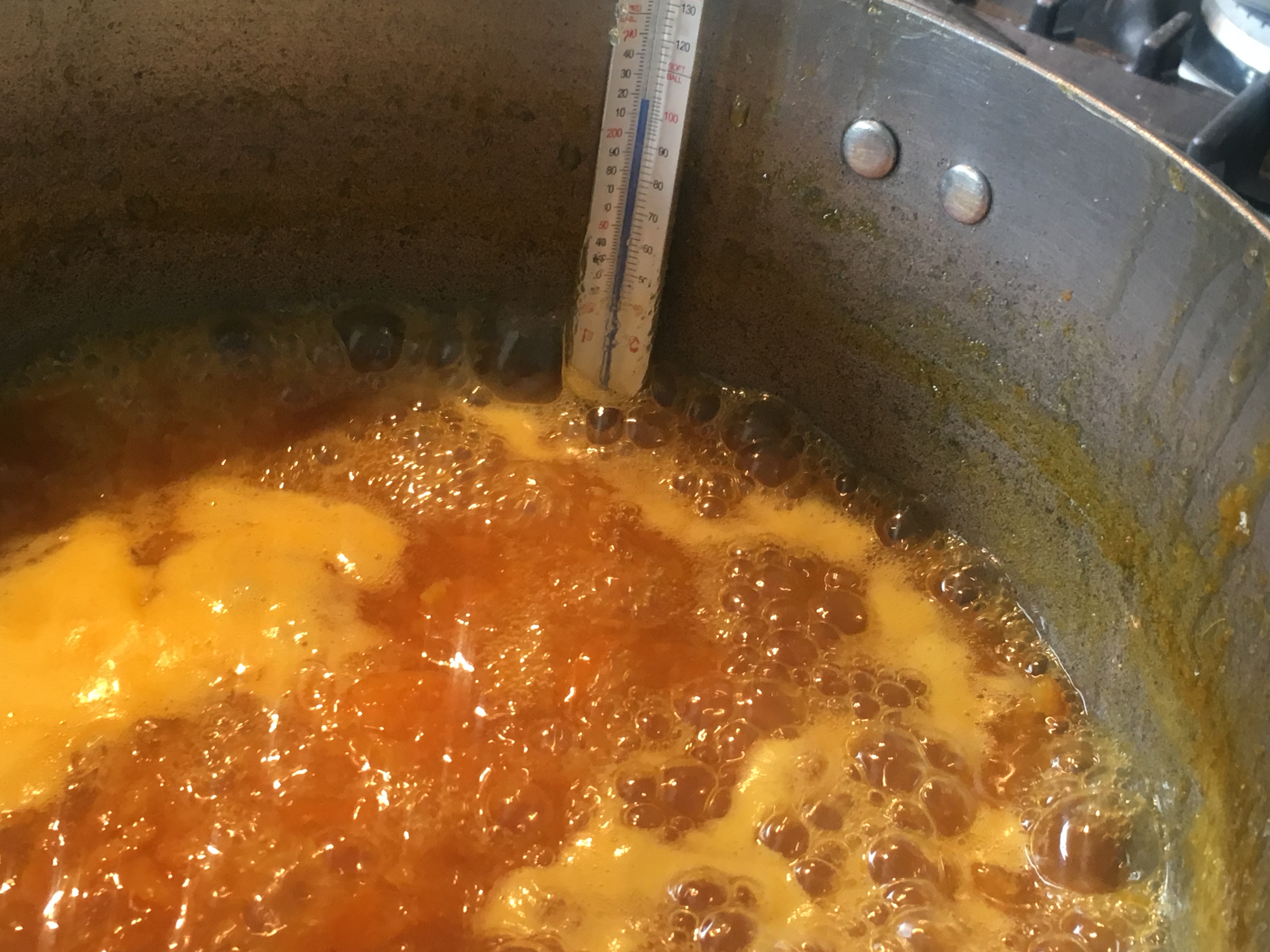
Next day, using a cup, measure out the pulp and place in a heavy saucepan. Measure the same amount of sugar and keep aside. Cook on medium heat until peels are soft. Remove any excess scum that forms on top and any remaining pips. Add the sugar, stir till dissolved. Cook uncovered on steady heat until jam sets on a cold plate or when it reaches 220 degrees on sugar thermometer.
Bottle in clean jars and label.
Enjoy knowing that no fruit has gone to waste, it’s delicious and will last throughout the year to share with family and friends!
In our home town of Circello, back in Italy, Easter is a special time to celebrate new life and the coming of spring (and end of winter!). Every year we make Sciavole to celebrate, a simple dish of eggs and cheese wrapped in pastry. We’ve made it every easter since forever, and here’s the recipe.
The video also includes a snippet on how to make Crostoli, which is done using the same pastry as for the Sciavole. They’re a delicious little treat.
Sciavole Recipe
1 kg of plain flour
Add 3 eggs and a pinch of salt
Work into a dough, adding water as required
Let sit for 30 mins, wrapped in glad wrap
Cheese filling is mixture of Pecorino, Grana Padano and Mozzarella. A large bowl full
Add about a dozen eggs until the mixture holds together well, but is not too dry
Roll the dough out into flat lengths, using a machine pasta maker is easiest!
Cut pastry into circles with a plate.
Add cheese pastry in half, wet edges, fold over and crimp with a fork.
Brush with a egg wash (egg and milk), then poke with fork holes.
Bake for about 30mins in a 200C oven.
Once golden, take out and cut into slices.
These can be frozen as required to keep for longer.
Crostoli
Take the same pastry, then cut into strips, fold into crostoli shapes (watch the video!), then shallow fry and cover with icing sugar.
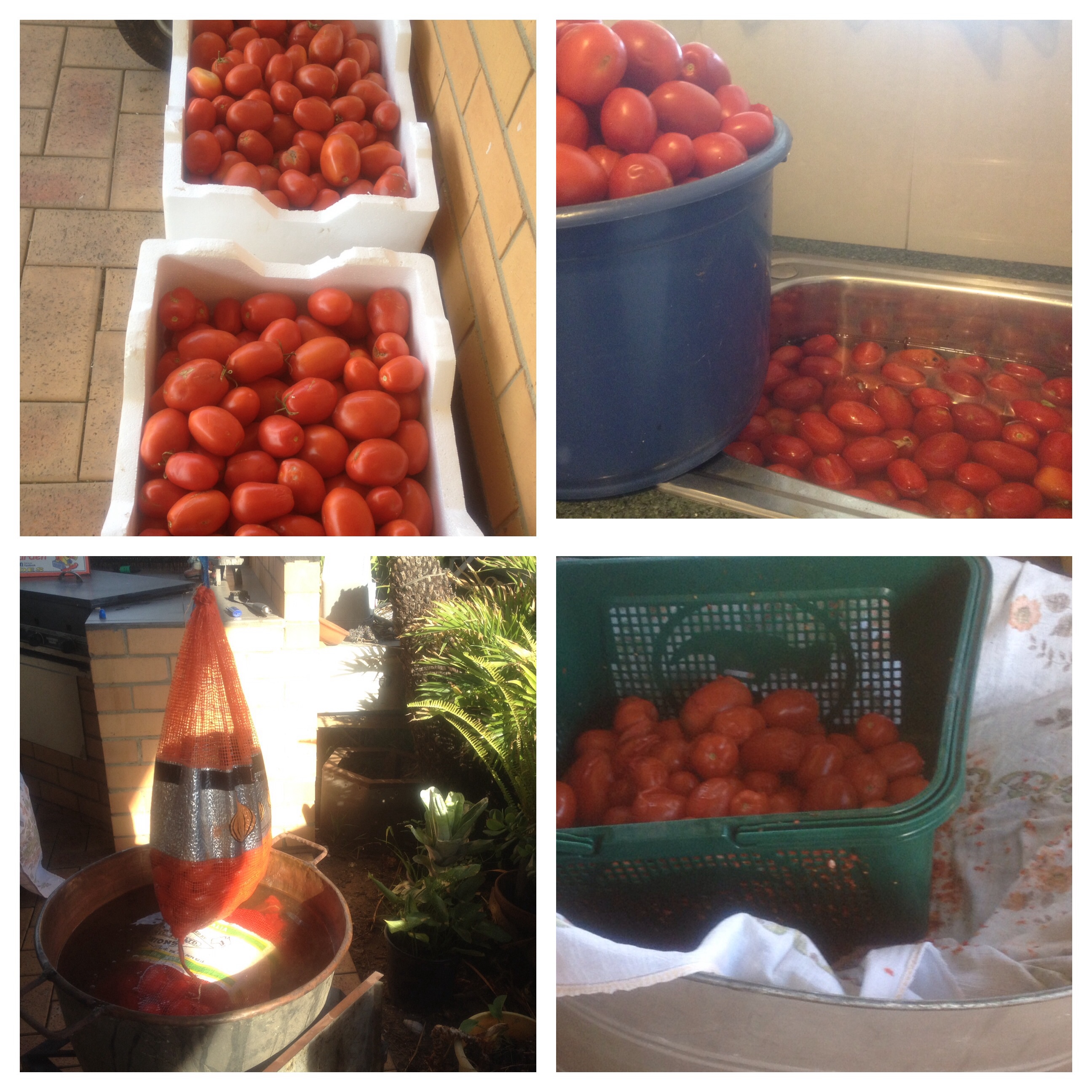
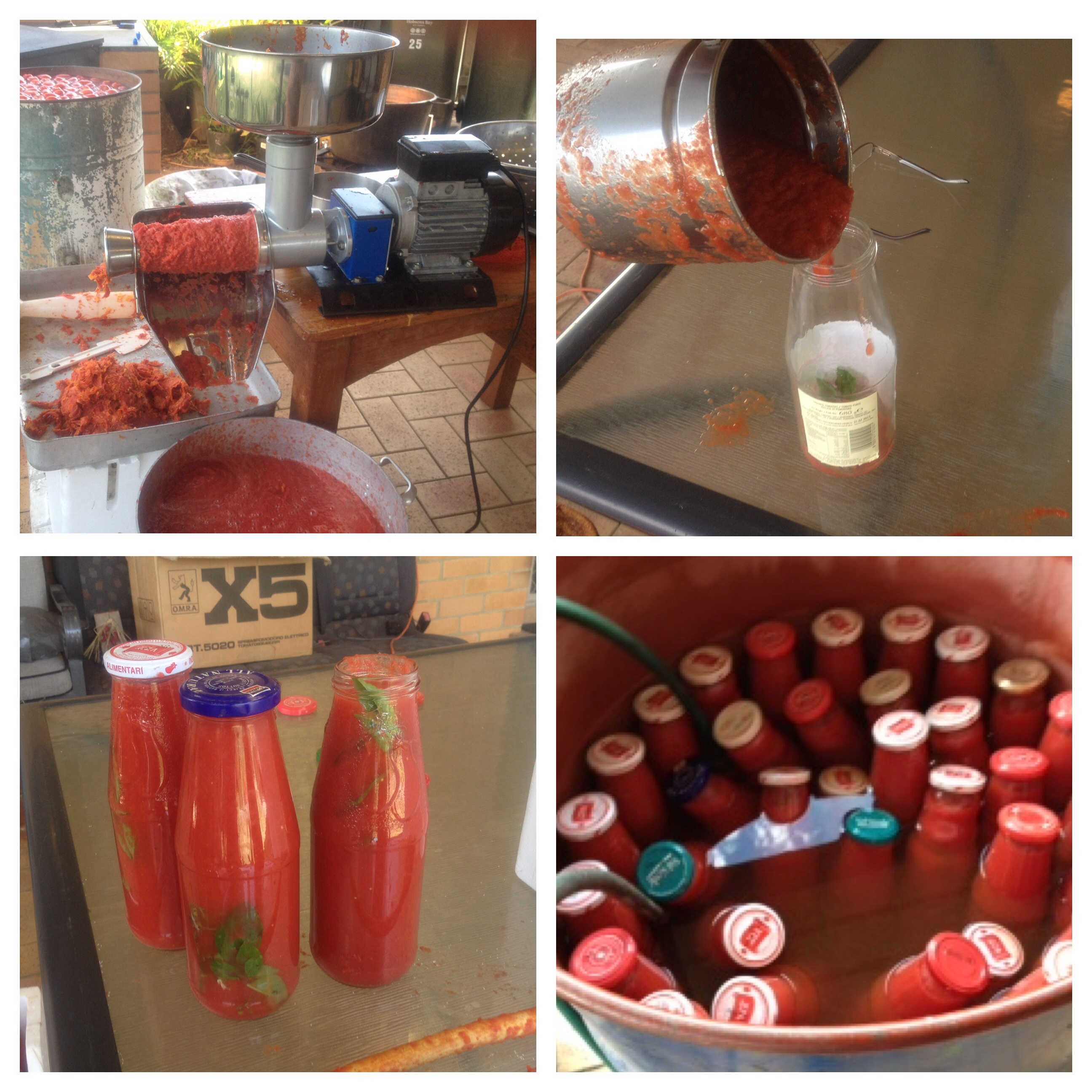
It’s this time of the year when many Italo-Australian people in Melbourne do ‘la salsa’ – tomato sauce, or tomato passata. The best time is when the tomatoes are ripe and plentiful. You basically wash the tomatoes, boil them for a few minutes, drain, remove seeds and skin by whatever machine you have. Add salt to taste and fill bottles or jars, adding a sprig of basil but do not fill right to the top. Seal and place in large container. Top with warm water and bring to boil. Simmer 10-15 minutes. Leave in water until cold. These can then be used for whatever tomato recipe you need and will keep for more than one year.
Whether you have a surplus of veggies in the garden or you want to stock up the pantry for those times when you are busy or unexpected guests arrive, giardiniera is great to have on hand. You can serve it with antipasto, side dish or something extra even if you decide to have take away. And because you make it, you know exactly what is in it…..
Giardiniera
3 kilos mixed vegetables such as capsicum, cauliflower, carrots, celery, cucumber, fennel, onions.
1 litre white vinegar
1 litre water
½ litre oil
50gr salt
200gr sugar
Wash and cut up vegetables to bite size.
Place rest of ingredients in large saucepan and bring to boil, stirring well to dissolve salt and sugar. Add all vegetables and bring to boil again. Immediately remove vegetables with a slotted spoon and place in clean jars. Cover with the boiling liquid and seal. Place jars in large pot and cover with water. Bring to boil for a couple of minutes and turn off heat. Leave immersed until cooled down.
Not enough room in your vegie patch? How about growing the zucchini from the roof? That’s what we’ve done here. The vegie patch is getting very full so we grew this zucchini up a pole and then along this veranda, letting the zucchini’s grow downwards. The zucchini’s are very long! The longest is 90 cms! And it saves a heap of room.
Dad’s been making wine every year since he can remember, and although it’s a lot of work, here’s how he does it. The kids even make a little appearance from about 4:15.
The male flowers on a zucchini plant (or courgette plant if you’re from the UK) don’t actually produce zucchini’s, so they’re perfect for picking, dipping in batter, frying and covering with honey. Nothing goes to waste in this household. Here’s how you do it.





 Italian Masterclass